
Buying guide · Transformers camera accessories
SmallRig AD-01 Bumblebee Edition: A Buyer’s Guide for Creators
Understand the Bumblebee edition’s mounting system, load limits and carrying requirements before choosing it for your camera setup.
Panda Wagon Blog · October 22, 2026 · 8 min read
The SmallRig AD-01 Bumblebee Edition brings Transformers styling to a full-size video tripod. Its yellow-and-black finish makes it an appealing choice for creators who want their working equipment to reflect their collection. However, choosing this edition involves more than deciding whether you like the design. Your camera load, mounting plate, shooting space and transport arrangements all matter.
This guide explains what to check before buying the SmallRig AD-01 Bumblebee Edition tripod. It focuses on the collaboration model and practical buying decisions, using published product information rather than a hands-on review. Check the current listing for availability, package details and ordering options.
Quick answer
Consider it for: planned video shoots where a full-size tripod and the Bumblebee design both appeal to you.
Check first: your complete camera load, mounting plate and the space needed to carry and position it.
Important distinction: SmallRig lists a 6 kg head capacity and an 8 kg tripod capacity. Treat them as separate ratings.
In this guide
What Is the SmallRig AD-01 Bumblebee Edition?
This is the Transformers Bumblebee version of SmallRig’s AD-01 heavy-duty fluid head tripod. The collaboration combines camera-support equipment with a recognisable character colour scheme. When checking a listing, look for the full Bumblebee edition name and manufacturer product reference 5523, rather than relying on the AD-01 name alone.
That distinction matters because search results for SmallRig AD-01 can include other versions, older listings and different packages. A review of another AD-01 version may offer useful background, but it should not automatically be treated as confirmation of every feature or accessory supplied with this edition.
Check the exact edition in the photographs
Compare the listing’s main photograph, detail images and written product name. They should consistently show the Bumblebee model you intend to purchase. If a seller mixes standard-model photographs with collaboration packaging, ask which version will arrive. For a collector, the appearance and supplied presentation can be part of the buying decision.
You can explore the wider Transformers collection at Panda Wagon for related collaborations. Keep this tripod’s purpose in mind: it belongs in a camera-support setup, even when its styling complements other Bumblebee products.
Understand the Head and Tripod Load Limits
SmallRig lists different capacities for the fluid head and tripod: 6 kg for the head and 8 kg for the tripod. When planning a complete setup, the higher tripod figure should not be used as permission to exceed the head’s stated limit. Every component supporting your camera needs to be suitable for the assembled load.
Weigh the complete mounted setup
Start with the camera body and lens, then include everything attached to them: a cage, battery, microphone, monitor, mounting hardware and any other accessories carried by the head. Weigh the configuration you actually intend to use. A camera-body specification alone gives an incomplete picture when several accessories are added.
Also consider how that equipment is arranged. A long lens or an accessory positioned far from the camera can change the balance of the rig. Meeting a weight figure does not remove the need to secure and balance the camera correctly. Follow the supplied instructions, support the camera while adjusting it and check the mounting connection before recording.
Buyer’s check: write down your complete rig weight and compare it with the head rating before deciding whether this edition suits your equipment.
Check Quick-Release and Camera Compatibility
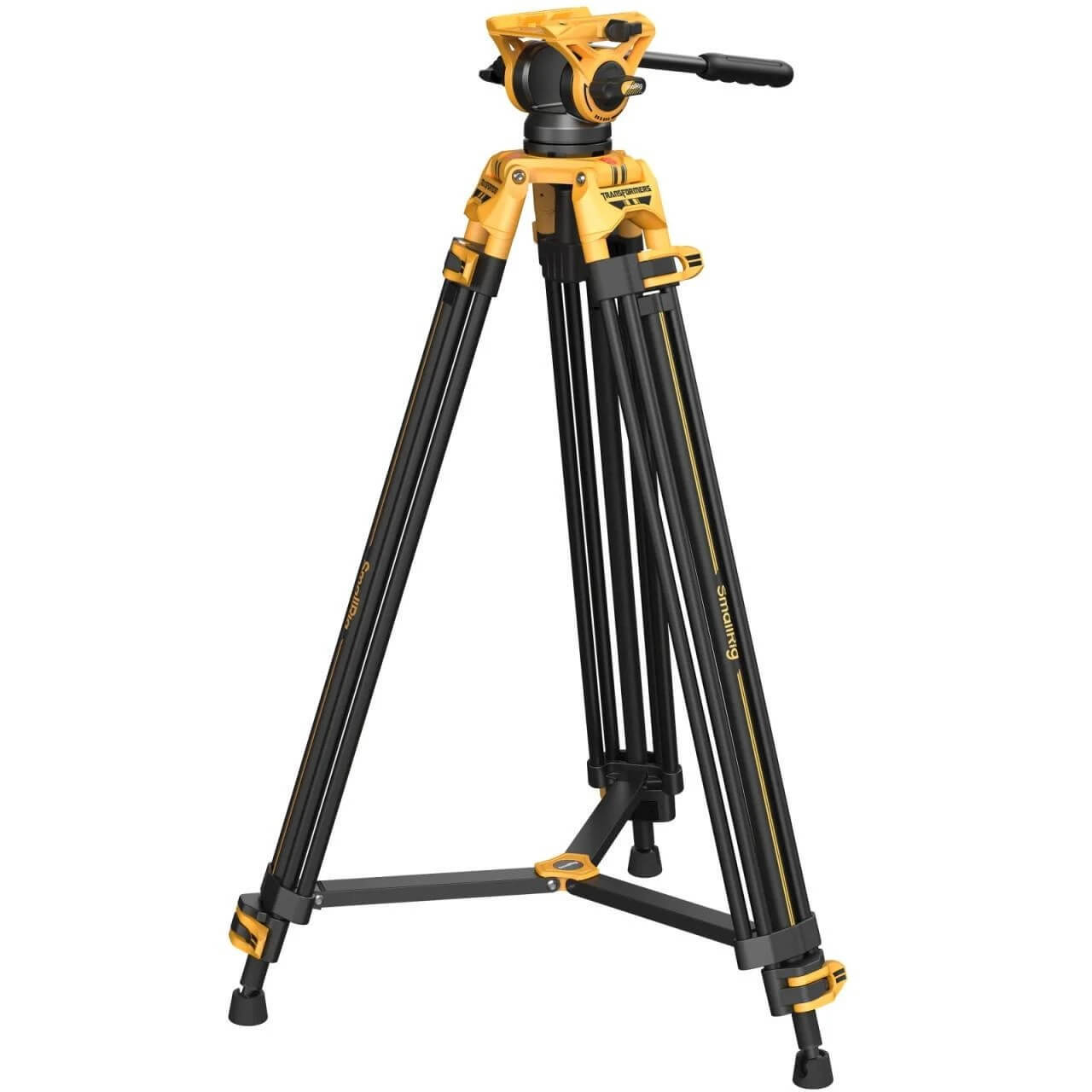
The manufacturer describes a dual-mode quick-release system supporting DJI RS and Manfrotto plates, with DJI RS 2, RS 3 and RS 3 Pro named in its compatibility information. This can be relevant to creators moving a camera between supported equipment, but the exact plate and camera arrangement still need checking.
Do not assume that every plate carrying a familiar brand name will fit. Identify the plate you own, check its model and compare it with the compatibility information for the Bumblebee edition. If your plate or stabilizer is not named, request confirmation rather than treating a similar shape as proof.
Look beyond the mounting screw
A suitable screw connection is only one part of compatibility. Check whether the plate can sit securely beneath your camera or cage, whether any locating features interfere and whether cables have clearance. Consider access to doors and controls you use during a shoot. These checks are especially useful when your camera remains inside a cage.
Before changing supports, support the camera with one hand and follow the release procedure in the manual. After mounting, check that the plate has engaged and that the camera cannot slide unexpectedly. Treat a quick-release mechanism as a convenience that still requires a deliberate security check.
Plan for Height, Framing and Available Space
SmallRig lists a working-height range of 85–186 cm. Compare that range with your intended camera position, taking account of the camera and head arrangement. A suitable height for a seated presentation can differ from the height needed for standing demonstrations or an overhead-looking product angle.
Think about the room as well as the subject. Leave space for the tripod legs, the operator and safe movement around the setup. In a small product studio, plan where the support will stand relative to the table, lights and background. Avoid choosing a shooting position that forces people to step over the legs or pull cables across a walkway.
Match the support to the shot
For a static presentation, check the composition and stability before starting a long recording. For a moving shot, plan where the camera needs to turn and whether accessories or cables restrict that movement. Test the full intended movement with the camera securely mounted before recording the take.
The fluid head is intended for controlled camera movement. However, a smooth-looking result also depends on balance, adjustment and operator technique. This guide does not make a tested claim about the footage you will achieve. Practise with your own camera configuration and review a short recording before beginning an important shoot.
Is It Practical to Carry?
The published net weight is approximately 4 kg, which deserves attention if you regularly carry equipment between locations. Add that to your camera bag, lighting and other support equipment when planning transport. A tripod that works well once positioned may still be inconvenient for a route involving long walks or repeated vehicle transfers.
SmallRig describes an anti-slip carrying handle and a storage bag. These features help with handling and organisation, but they do not change the total load you must transport. Check the folded dimensions against your available storage space and vehicle before ordering.
For creators who work mostly in one room, carrying weight may be less important than the assembled setup. For someone filming at several locations in a day, it can become a major part of the decision. Choose according to your normal working routine, rather than an occasional shoot that makes the tripod seem ideal.
What Should You Confirm Before Ordering?
Use the current SmallRig Bumblebee tripod listing to check the product being offered. Confirm the edition, supplied items, availability and ordering terms at the time you buy. Avoid relying on an old screenshot for a price or dispatch expectation.
Review the package contents item by item. Check what camera-mounting hardware is included and whether your setup needs anything additional. Product photographs can show examples of equipment in use, so do not assume every object pictured forms part of the package.
If you are purchasing partly for your Transformers collection, ask about the supplied packaging and condition where those details matter to you. Keep a copy of the order details and the seller’s confirmation of any specific questions. This makes your expectations clear before the product is dispatched.
For broader collaboration ideas, our Transformers gaming accessories guide introduces other types of themed technology. Use this focused tripod guide to assess the camera-support purchase on its own requirements.
Frequently Asked Questions
Is the Bumblebee edition the same listing as the standard SmallRig AD-01?
It is a distinct Transformers collaboration edition. Check the full edition name and product reference, because general AD-01 searches can return other versions. Use the edition-specific information when confirming specifications and supplied items.
Can I use the 8 kg tripod rating for my complete camera load?
The head has a separately stated 6 kg capacity. Assess the complete mounted setup against the limits of every supporting component, including the head. Do not substitute the higher tripod figure for the head rating.
Will my existing quick-release plate fit?
Check its exact model against the manufacturer’s compatibility information. The product page names specific DJI RS models and describes Manfrotto plate support, but this should not be interpreted as universal compatibility with every plate.
Is this a hands-on review?
No. This is a buying guide based on published product information and practical setup considerations. For edition specifications, consult SmallRig’s official Bumblebee AD-01 page; confirm current purchasing details with the seller.
Explore the collaboration
Check the Bumblebee edition against your camera setup.
View the Bumblebee tripod → Explore Transformers →